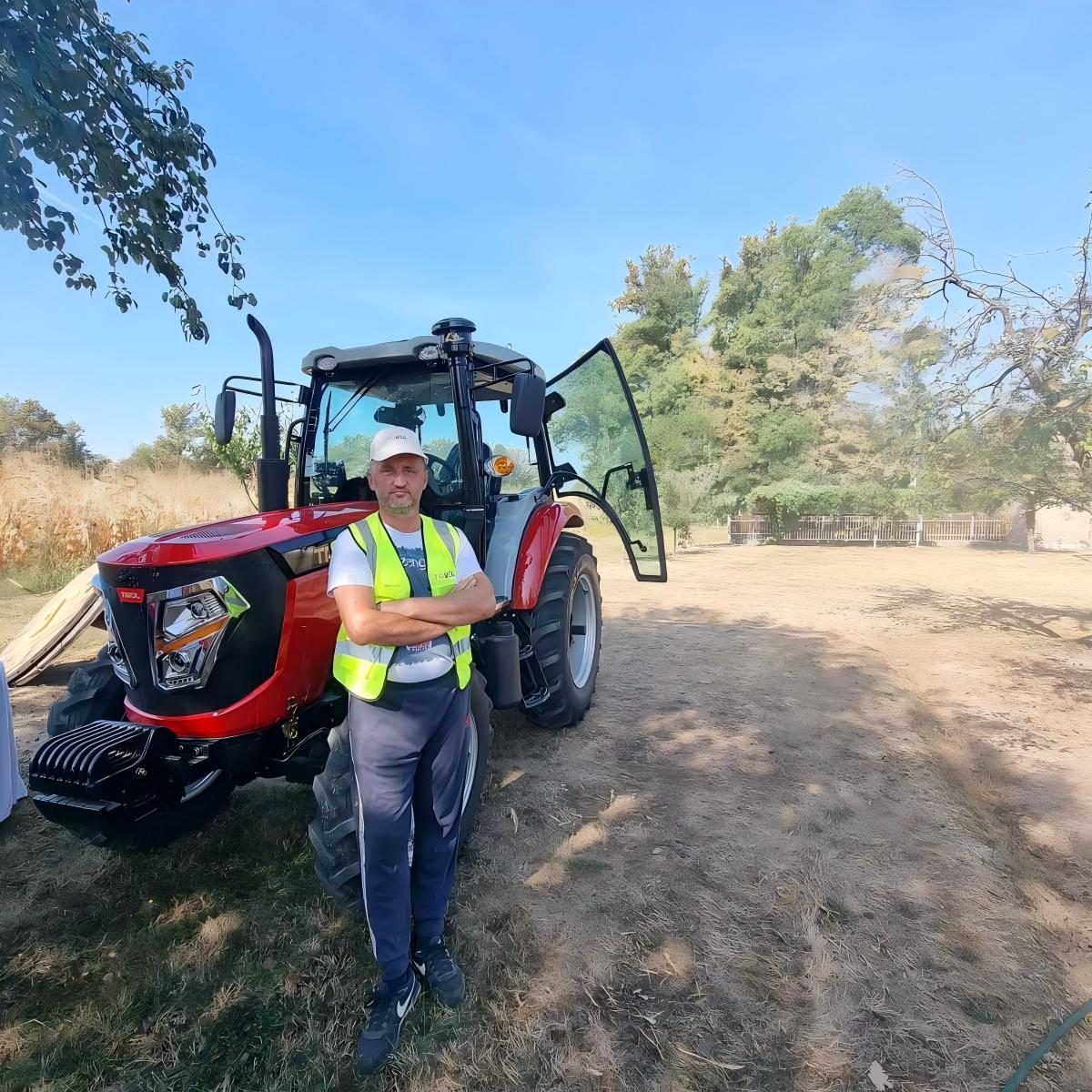
Investing in farm machinery represents a massive capital expenditure for any operation. You cannot treat wheel and tire selection as a mere afterthought. Instead, you must recognize them as the primary driver of machine efficiency and field productivity. Incorrect wheel specifications quietly drain your budget. They directly cause hidden operational losses, including increased fuel consumption through excessive wheel slip. Furthermore, mismatched tires accelerate tread wear and trigger severe yield reductions from soil compaction.
This comprehensive guide bypasses basic definitions. We provide a strict, ROI-focused evaluation framework to help you select, validate, and maintain the correct tractor wheels. You will learn to reverse-engineer your wheel choices based on your unique operational realities. Expect to walk away with actionable strategies for matching tire profiles to soil conditions and managing dynamic loads.
Key Takeaways
Yield Protection: Matching tire footprint and pressure to specific soil profiles is the most effective way to mitigate yield-reducing compaction.
TCO Over Initial Price: Choosing between radial, bias, IF (Increased Flexion), or VF (Very High Flexion) construction dictates the Total Cost of Ownership (TCO) across a 3-to-5-year lifecycle.
Application-Specific Matching: There is no universal "best" wheel; selection must be reverse-engineered from primary use cases (e.g., high-roading vs. heavy draft work).
Implementation Matters: Even premium wheels will fail prematurely without rigorous pressure management and proper machine ballasting.
The Financial Reality of Tractor Wheel Selection
Buying cheap rubber often creates the most expensive operating conditions. You must look beyond the initial purchase price to understand the true financial impact of your selection. Poorly specified tires act as a constant drag on your daily profitability.
Quantifying Wheel Slip
Wheel slip is not entirely bad. In fact, a small amount of slip protects your drivetrain from shock loads. For optimal traction, you want wheel slip to stay between 8% and 15%. Falling below 8% usually means you are carrying too much dead weight. You burn unnecessary fuel just to move heavy iron across the field.
Conversely, exceeding 15% slip creates a severe financial penalty. Your tires spin endlessly against the topsoil. This wastes costly diesel fuel and exponentially increases tire wear. If you constantly operate at 20% slip, you essentially leave one out of every five gallons of fuel in the dirt. Proper tire selection directly stabilizes your slip percentage.
The Cost of Soil Compaction
Soil compaction serves as a direct drag on crop yields. Heavy machines press downward, destroying the delicate pore spaces inside the soil structure. Roots cannot penetrate hardpan layers. Water pools on the surface instead of absorbing into the ground.
Compaction results from a simple mathematical relationship. It depends on axle load, tire contact area, and internal air pressure. A smaller footprint focuses the entire weight of the machine into a tiny, high-pressure zone. Upgrading to a larger footprint spreads that weight out. Protecting your soil structure is one of the easiest ways to protect your long-term farm profitability.
Lifecycle Expenses vs. Acquisition Cost
Evaluating wheels based solely on upfront procurement costs is a critical mistake. The sticker price represents only a fraction of the actual expense. You must calculate the heavier financial impacts over a three-to-five-year period.
Fuel Efficiency: Proper lugs and large footprints reduce rolling resistance, cutting daily diesel consumption.
Replacement Frequency: High-quality rubber compounds resist stubble damage and chunking, delaying the next purchase.
Field Efficiency: Better traction means you finish plowing or planting hours earlier, saving labor costs.
Tracks vs. Wheels: Validating the Agricultural Wheel Tractor
Farmers constantly debate the merits of tracks versus wheels. While tracks offer incredible flotation in swampy terrain, the traditional Agricultural Wheel Tractor remains the undisputed backbone of global farming. You must objectively assess when wheels make the most financial sense for your specific acreage.
Baseline Comparison and The Case for Wheels
Wheeled setups deliver distinct operational advantages over tracked machines. First, they offer superior roading speeds. If your farm features scattered plots connected by paved highways, wheeled machines get you from point A to point B much faster. Tracked machines generate massive heat during high-speed roading, which degrades rubber quickly.
Second, wheeled machines boast significantly lower maintenance costs. Track undercarriages require constant attention. Bogie wheels, idlers, and tensioners wear out fast in abrasive soils. Wheels only require correct air pressure and occasional rotation.
Finally, wheeled machines maneuver flawlessly in tight headlands. They do not scuff or tear up the topsoil during sharp turns. Combined with a lower initial capital outlay, wheels provide exceptional versatility for mixed-use operations.
Acknowledging Limitations
We must transparently discuss where wheels struggle to set realistic deployment expectations. Wheels cannot match the ultimate flotation of wide tracks in severely saturated mud. If you harvest rice in standing water or pull heavy carts through relentless autumn bogs, wheels will eventually sink. Acknowledging this limitation helps you deploy wheeled machines where they excel: in standard tillage, planting, and transport applications.
Three Essential Dimensions for Wheel Evaluation
There is no universal tire. You must reverse-engineer your selection by evaluating three distinct dimensions of your daily operation.
1. Soil Condition and Terrain Matching
Your local soil type dictates your tread pattern. Using the wrong tread aggressively destroys the tire or leaves you stranded.
Hardpan and Abrasive Surfaces: Driving mostly on dry, rocky dirt or paved roads requires a higher lug-to-void ratio. You need more rubber touching the ground. This ensures smooth roading, reduces operator cabin vibration, and resists chunking. Thick, blocky lugs prevent sharp rocks from tearing the rubber apart.
Mud and Wet Conditions: Sticky, wet clay demands deep treads. You should look for R-1W or R-2 classifications. The aggressive 45-degree lug angles bite deep into the muck. More importantly, they provide aggressive self-cleaning action. As the tire rotates, the flexing rubber actively throws the mud out from between the lugs.
Delicate and Turf Environments: Operating on golf courses, orchards, or established pastures requires high-flotation, non-directional treads. These button-style patterns spread the weight evenly. They minimize surface disturbance and prevent turf tearing during tight turns.
2. Load Capacity and Draft Requirements
Tires carry the entire physical burden of your work. You must accurately calculate machine weight to prevent catastrophic sidewall failures in the field.
Static vs. Dynamic Loads: Static weight is simply the tractor sitting still. Dynamic load is much more volatile. It includes the shifting front-to-rear weight distribution during hard acceleration. It accounts for liquid ballast sloshing inside the tires. It also factors in the massive downward tongue weight of heavy folding implements.
Load Index Validation: You must read and match the tire’s load index to the maximum operating capacity of your machine. Never guess these numbers.
Common Load Ratings and Capacities
Load Index Number
Capacity Per Tire (Lbs)
Capacity Per Tire (Kg)
Typical Application
130
4,189
1,900
Utility / Light chores
145
6,393
2,900
Mid-size planting
160
9,921
4,500
Heavy tillage / Draft
175
15,212
6,900
High-horsepower articulated
3. Tire Construction: Radial, Bias, and Advanced Tech
The internal skeleton of the tire dictates how it behaves under stress.
Bias Ply: We consider bias ply a legacy or budget-conscious option. The internal cords run diagonally from bead to bead. This creates a very stiff, puncture-resistant sidewall. However, it results in a smaller, rounded footprint. Bias tires are best reserved for stationary PTO tasks, light yard chores, or forestry environments facing extreme sidewall puncture risks.
Standard Radial: Radials serve as the baseline for modern machinery. Their cords run perpendicularly across the tire. This allows the sidewall to flex independently from the tread. The result is a much larger, flatter footprint. Radials offer significantly better fuel economy, superior traction, and a longer field life.
IF and VF Technology: Increased Flexion (IF) and Very High Flexion (VF) represent the pinnacle of modern engineering. IF tires carry 20% more weight than a standard radial at the same air pressure. VF tires carry 40% more weight at the same pressure. Alternatively, you can run them at drastically lower pressures to maximize flotation. While they command a premium price, they easily justify the cost for operations running heavy carts over sensitive soils.
Tire Construction Comparison Summary
Construction Type
Sidewall Flexibility
Footprint Size
Primary Benefit
Bias Ply
Rigid
Small / Rounded
High puncture resistance
Standard Radial
Flexible
Large / Flat
Excellent baseline traction
IF / VF Technology
Highly Flexible
Maximum / Elongated
Extreme load capacity at low PSI
Technical Specifications and Compatibility Protocols
Selecting the perfect tread pattern means nothing if the tire physically conflicts with your machine hardware. Strict adherence to mechanical protocols prevents dangerous accidents.
Rim Width Compliance
Farmers sometimes try to force wide, high-flotation tires onto standard narrow rims to save money. This dangerous practice severely alters the tire profile. It rounds the center of the tread, lifting the outer lugs off the ground. You instantly degrade your traction and completely void the manufacturer’s warranty. Always match the tire to the exact rim width specified in the engineering manual.
Rolling Circumference and Lead/Lag
Most modern machines feature Mechanical Front-Wheel Drive (MFWD). The front tires are smaller than the rear tires. You must calculate the exact front-to-rear tire ratios to ensure they work together. The front tires must pull slightly faster than the rear tires push. This is known as "lead."
Optimal lead ranges from 1% to 5%. If you install mismatched rolling circumferences, the rear tires will fight the front tires. This creates massive transmission wind-up. Eventually, it will shatter the internal gears of your front axle drivetrain.
Stubble Damage Resistance
Modern genetically modified crops feature incredibly tough stalks. Corn and soybean stubble act like rigid wooden spears after harvest. They will easily puncture standard rubber compounds. When operating a Agricultural Wheel Tractor in these environments, you must evaluate specialized stubble-resistant tires. These feature Kevlar-reinforced belts and hardened rubber blocks specifically designed to deflect sharp stalks.
Implementation Risks and Lifecycle Management
Procurement only solves half the puzzle. How you manage the wheel in the field determines its ultimate lifespan and performance.
The Ballasting Equation
Correct cast iron or liquid ballasting is strictly required to optimize the tire’s intended footprint. An unballasted machine will bounce across the field and spin its wheels. You must distribute weight carefully. Usually, a 40% front and 60% rear weight split works best for heavy pulling. Adjust your suitcase weights and wheel weights to hit this target.
Dynamic Pressure Management
Air pressure must change based on your activity. High speeds on the highway require high pressure for stability. Heavy pulling in the field requires low pressure for maximum grip. We strongly advocate for Central Tire Inflation Systems (CTIS). CTIS allows you to adjust air pressure on the fly from the cab. If you lack CTIS, you must enforce strict manual pressure adjustments when transitioning between environments.
Routine Inspection SOPs
You must establish a clear post-purchase maintenance checklist. Ignore this, and you will miss the early warning signs of tire failure. Follow these standard operating procedures (SOPs):
Check Cold Pressures: Measure PSI every morning before the sun heats the rubber.
Monitor Lug Wear: Inspect the center lugs for cupping, which indicates overinflation.
Inspect Valve Stems: Ensure no mud or debris is packed around the stem base, preventing slow leaks.
Assess Sidewall Fatigue: Look for deep cracks or bulges near the bead, indicating severe overloading.
Verify Hardware Torque: Check rim bolts weekly to prevent wheel detachment during heavy draft work.
Conclusion
Securing the right tires follows a highly logical, linear path. First, audit your primary terrain and soil conditions. Next, calculate your dynamic loads and implement weights. Then, select the optimal construction type—whether that means relying on standard radials or upgrading to advanced VF technology. Finally, rigorously verify your rim widths and MFWD drivetrain compatibility.
Maintain a healthy level of skepticism regarding premium upgrades. Over-specifying a tire is just as financially inefficient as under-specifying one. Buying expensive VF tires for a yard-bound utility tractor wastes capital that you could deploy elsewhere. Match the technology strictly to the task.
Your next step is clear. Conduct a comprehensive load-and-inflation audit of your current fleet this week. Weigh your machines by axle. Check your cold pressures. If you notice severe tread wear or constant power hop in the field, consult with a specialized dealer for a site-specific tire assessment.
FAQ
Q: How do I know if I need IF or VF tires for my agricultural wheel tractor?
A: Base this decision on two factors. First, do you need to drastically reduce severe soil compaction to protect sensitive crop yields? Second, do you need to carry incredibly heavy implements without widening the machine's overall transport width? If yes, VF technology justifies the premium investment.
Q: What is the expected lifespan of a premium tractor wheel?
A: Lifespan is measured in operational hours, typically ranging from 3,000 to over 5,000 hours. This variance depends heavily on your roading percentages. Extensive driving on paved asphalt destroys treads quickly. Correct inflation management and strict load discipline significantly extend this lifespan.
Q: Can I replace just one tire on my MFWD tractor?
A: We strongly advise against replacing just one tire. A new tire has a larger rolling circumference than a worn tire. Mixing them creates unmatched circumferences on the same axle. This forces the differential to work constantly, causing severe heat and eventual drivetrain failure. Always replace tires in axle pairs.
Q: How does incorrect tire pressure actually damage the tractor?
A: Overinflation crowns the tire, causing rapid center-tread wear, harsh operator vibrations, and deep soil compaction. Underinflation is equally destructive. It causes the tire bead to slip against the metal rim. It also creates excessive sidewall flex, which leads to overheating, internal cord separation, and catastrophic cracking.