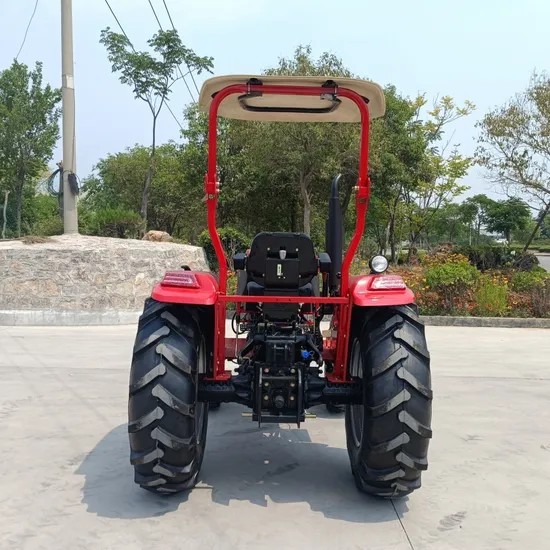
Purchasing an agricultural machinery unit stands as a major capital expenditure. This crucial decision directly impacts your operational efficiency and daily profitability. A mismatched machine creates serious problems on the farm. If it runs underpowered, you risk delayed harvest windows and implement damage. If it sits over-spec'd, you face wasted capacity and excessive fuel burn. You need an evidence-based framework to guide your purchase accurately. This guide provides exactly that. We will evaluate technical specifications step-by-step. We will align equipment capabilities directly with your specific agricultural outcomes. You will learn to measure true hydraulic capacity. You will understand how to match horsepower to your implements safely. We also explore transmission types suited for varying farm terrains. By the end, you will confidently navigate dealership floors. You will select the optimal machine for your unique land.
Key Takeaways
PTO over Engine Power: Base purchasing decisions on Power Take-Off (PTO) horsepower rather than raw engine horsepower to ensure implement compatibility.
Task-Driven Selection: Match the tractor’s chassis, weight, and transmission type directly to primary farm operations (e.g., loader work vs. continuous tillage).
Hydraulic Capacity is the Bottleneck: Look beyond lifting capacity; evaluate hydraulic flow rates (GPM) to prevent sluggish implement performance.
Dealer Proximity Dictates Uptime: The availability of local parts and certified service technicians is often more critical than upfront brand pricing.
Evaluating Your Operational Baseline
Many buyers mistakenly size equipment based on total property lines. You must differentiate between total farm acreage and actively worked land. A 100-acre parcel might only contain 40 acres of tillable soil. The remaining 60 acres might be dense woods or rocky marsh. Base your machine sizing strictly on the active operational area. Next, clearly define your primary tasks. Heavy tasks include continuous tilling, baling, and material handling. These operations require robust chassis weight and high torque. Secondary tasks include occasional mowing or driveway grading. Never size a machine solely around secondary tasks. Optimize your choice for the work it performs daily.
Soil density drastically changes power requirements. Heavy clay soils demand significant pulling power. Sandy or loamy soils offer less resistance to plow blades. Ground moisture also dictates traction needs. If you work in continuously wet conditions, you need specific tire treads. Topographical grading impacts stability across your fields. Steep hills require a wider wheelbase and a low center of gravity. You will likely need 4WD or Mechanical Front-Wheel Drive (MFWD) configurations for uneven terrain. These features prevent slippage and keep operators safe.
Consider who will operate the machinery on your farm. Labor constraints often dictate technology choices.
Assess Operator Experience: Novice operators struggle with complex manual gearboxes. They benefit from intuitive, seamless hydrostatic controls.
Evaluate Training Time: Advanced digital displays require extensive operator training. Standard mechanical levers offer a much shorter learning curve.
Identify Labor Turnover: High turnover rates favor simpler machinery. You want new hands working safely in days, not weeks.
Factor these realities into your final purchase. An overly complex cab creates operational bottlenecks if your team cannot use it efficiently.
Matching Horsepower and Transmission to the Workload
Engine horsepower gets all the marketing glory. However, Power Take-Off (PTO) horsepower gets the actual farm work done. You must understand this critical difference. Engine HP simply measures power at the engine's internal crankshaft. PTO HP measures the usable power delivered externally to your implements. A machine might boast 50 Engine HP but only deliver 40 PTO HP. Always check your implement manufacturer's requirements. If your rotary cutter demands 35 PTO HP, do not buy a unit with exactly 35 PTO HP. Build in a 15 to 20 percent safety margin. A 42 PTO HP rating prevents engine stalling. It also drastically reduces premature mechanical wear. When you choose a reliable Agricultural Tractor, verifying this PTO margin ensures long-term durability.
Your transmission choice dictates daily operator comfort. It also determines fuel efficiency for specific farming tasks. Let us review the primary transmission frameworks available today.
Transmission Framework Comparison Chart
Transmission Type
Best For
Operational Strengths
Hydrostatic (HST)
Front-loader work, tight spaces
Continuous speed changes without clutching. Excellent for stop-and-go maneuvers.
Gear-Driven / Synchro
Heavy continuous tillage
Maximum power transfer to wheels. No fluid power loss. Ideal for steady ground engagement.
Power Shuttle
Varied utility work
Offers clutch-less directional changes. Balances power transfer with ease of use.
Hydrostatic transmissions use pressurized hydraulic fluid to propel the machine. They are incredibly user-friendly. You simply press a pedal to move forward. You release it to stop safely. This makes HST perfect for loader work. Gear-driven transmissions lock mechanical gears into place. They deliver raw, uninterrupted power directly to the axles. You want gear-driven models for pulling heavy plows all day. Power shuttle transmissions serve as the ultimate middle ground. They allow operators to switch from forward to reverse without a foot clutch. This proves invaluable during repetitive tasks like stacking hay bales.
Navigating Agricultural Tractor Categories
Manufacturers group machinery into distinct categories based on size and capability. Selecting the right class prevents massive operational headaches.
Compact and Sub-Compact Tractors (20–50 HP)
Sub-compact and compact machines excel in tight spaces. They navigate specialized row spacing in orchards perfectly. Estate owners use them for extensive property maintenance. However, you must evaluate their physical limits objectively. They lack the necessary chassis weight for heavy soil manipulation. If you try to rip hardpan soil with a compact, the tires will simply spin. They serve wonderfully for mowing, light grading, and moving mulch. A well-matched Agricultural Tractor in this compact category becomes an indispensable daily tool.
Utility Tractors (50–120 HP)
The utility category represents the standard farm workhorse. These machines offer incredible versatility across seasons. You can use them for daily livestock management chores. They handle round balers for hay production effortlessly. They also possess enough frame weight for moderate tillage work. Utility machines bridge the gap between agility and raw strength. Most feature enhanced hydraulic fluid outputs. This allows them to run larger implements seamlessly. They fit perfectly on mid-sized mixed-operation farms.
Row-Crop and 4WD Articulated Tractors (120+ HP)
Large-scale commercial farming demands massive raw power. Row-crop machines deliver 120 horsepower or more. They feature high-clearance axles to pass over tall crops safely. These machines integrate seamlessly with precision agriculture technologies. GPS and auto-steer systems come standard or as easy upgrades. 4WD articulated models bend in the middle for tight headland turns. They feature high-volume hydraulic systems. These run massive air seeders and wide tillage implements. Assess your return on investment carefully here. These giants require vast acreage to justify their acquisition.
Implement Compatibility and Ecosystem Integration
Buying the machine is only the first step. You must ensure it integrates perfectly with your existing farm ecosystem. Implement compatibility prevents costly workflow bottlenecks.
Three-Point Hitch Categorization
The industry standardizes rear connection points into specific categories. You must map hitch categories to tractor frames and horsepower. This ensures safe and effective implement pairing.
Category 0: Designed for sub-compacts under 20 HP. Uses 5/8-inch lower pins. Suited solely for very light garden tasks.
Category 1: Standard for compacts from 20 to 50 HP. Uses 7/8-inch lower pins. Ideal for standard rotary cutters and small box blades.
Category 2: Built for utility models from 50 to 90 HP. Uses 1-1/8-inch lower pins. Necessary for heavy hay balers and large commercial mowers.
Category 3 & 4: Engineered for row-crop giants exceeding 90 HP. Uses massive pins for heavy-duty ground-engaging implements.
Never adapt a heavy implement down to a smaller hitch category. The resulting stress will eventually fracture the hitch arms or lift links.
Hydraulic System Requirements
Lifting capacity only tells half the story. You must look beyond simple weight limits. You need to assess the total Gallons Per Minute (GPM) of the hydraulic system. Insufficient flow limits the operation of hydraulic motors. Planters, wrappers, and complex attachments demand high continuous flow. If your GPM is too low, the implement will operate sluggishly. Fluid temperatures will spike dangerously. Always check both the steering GPM and implement GPM. Ensure the implement pump provides enough dedicated flow for your most demanding attachment.
Future-Proofing the Power Ecosystem
Farm operations expand over time. Your power ecosystem must accommodate future growth. We strongly recommend evaluating remote valve availability during the purchase. Installing extra rear remotes at the factory costs much less than aftermarket additions. Consider front-PTO options as well. A front-PTO transforms your machine's utility completely. It allows you to run snowblowers or front-mowers effortlessly. These small upgrades ensure your Agricultural Tractor remains relevant as your farm scales.
Risk Mitigation and Implementation Realities
Beyond the initial selection, you must focus on implementation realities. Mitigating operational risk keeps your farm running smoothly during peak seasons.
Emissions Standards and Alternative Power
Modern diesel engines must comply with strict environmental regulations. Most utility and large models utilize Tier 4 engine compliance. This often means dealing with Diesel Exhaust Fluid (DEF) and particulate filters. You must understand the regeneration process of these filters clearly. Ignoring DEF warnings leads to sudden engine derating in the field. Train your operators extensively on these vital emission protocols. You might also evaluate alternative power solutions. Electric and renewable-powered machinery is actively entering the market. Currently, electric models shine in specialized use cases. They excel in enclosed greenhouses or light vineyard work. However, high-horsepower continuous tillage still relies entirely on traditional diesel platforms. Assess electric viability strictly against your daily run-time requirements.
The Dealer Support Imperative
Supply chain disruptions pose a massive risk to modern agriculture. A broken part during harvest costs thousands in lost yield. Therefore, dealer proximity and capability matter immensely. Establish a strict rubric for evaluating local dealerships. Look closely at their on-site parts inventory. Do they stock critical hydraulic hoses and specialized filters? Evaluate their mobile service capabilities thoroughly. A dealer who sends a repair truck directly to your field saves you precious transport time. Finally, demand complete warranty transparency. Understand exactly what labor the warranty covers before signing.
Conclusion
Selecting the ideal machine requires systematic evaluation. You must start with a rigorous operational needs assessment. Determine your active acreage and primary daily tasks. Next, focus heavily on power and weight matching. Ensure your PTO horsepower provides a safe performance margin for your heaviest implements. Verify that your transmission aligns perfectly with operator skill and local terrain. Then, conduct a strict implement verification process. Check hitch categories and hydraulic flow rates thoroughly. Finally, prioritize local dealership support to mitigate future downtime risks.
Take decisive action using this framework. We recommend shortlisting two to three specific models. Do not buy based solely on glossy brochures. Explicitly schedule on-farm demonstrations for your selected machines. If demonstrations are unavailable, arrange short-term rentals. Test them directly in your own soil conditions before finalizing any purchase agreement.
FAQ
Q: What is the difference between a utility tractor and a row-crop agricultural tractor?
A: Utility models feature a compact frame, lower clearance, and versatile horsepower (50–120 HP). They excel at mixed daily tasks like loader work and haying. Row-crop models have massive frames, high-clearance axles, and heavy horsepower (120+ HP). Commercial farmers use row-crop machines primarily for pulling wide planters and heavy tillage implements through established fields without damaging crops.
Q: How much horsepower do I realistically need for a 50-acre farm?
A: Your required horsepower depends entirely on your specific tasks, not just acreage. If you run a simple vegetable plot and do light mowing, a 30–40 HP compact model suffices. However, if you actively produce round hay bales or perform deep, continuous tillage on those 50 acres, you need a 60–80 HP utility machine to handle heavy PTO loads safely.
Q: Should I buy a new or used agricultural tractor?
A: Buying used saves upfront capital but carries maintenance risks. New models provide modern warranty coverage, competitive financing rates, and guaranteed uptime during critical seasons. However, new machines require strict adherence to Tier 4 emissions maintenance, including DEF management. Choose new if minimizing downtime is your highest operational priority.
Q: Can I upgrade my tractor's hydraulic capacity later?
A: Upgrading hydraulic capacity later is incredibly difficult and expensive. Factory-installed hydraulic pumps are tightly integrated into the internal transmission housing. While you can sometimes add an aftermarket PTO-driven auxiliary pump, it adds clutter and maintenance points. Always buy a machine with a factory hydraulic GPM flow that exceeds your largest implement's requirements.