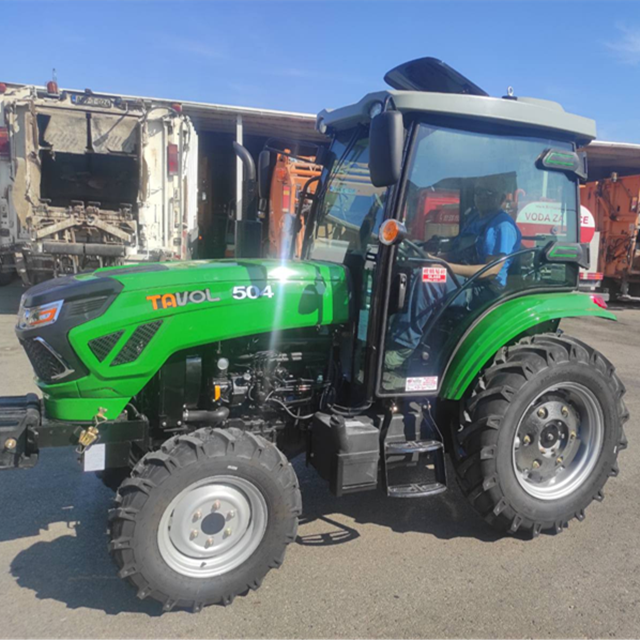
At the heart of every productive farm lies a reliable power source. An Agricultural Wheel Tractor transforms grueling manual labor into efficient, mechanized progress. It serves as the irreplaceable workhorse for modern agricultural operations worldwide. Choosing the right machine goes far beyond just comparing horsepower numbers on a spec sheet. You must match wheel configurations, implement compatibility, and operational scale to your specific agronomic goals. A mismatch can easily lead to severe soil damage, inefficient fuel use, and compromised crop yields over time. This guide provides a clear, evidence-based framework for evaluating and shortlisting the perfect wheeled machine for your farm. We will deeply explore core categories, feature evaluations, and practical implementation realities. By the end, you will know exactly how to align tractor specifications with your daily farming needs to maximize operational success.
Key Takeaways
Operational Alignment: An agricultural wheel tractor must be matched to farm size; two-wheel (walk-behind) models suit intensive micro-farming, while four-wheel models are required for broadacre scaling.
Traction vs. Compaction: Wheel configurations (like dual wheels or specific tire treads) directly dictate the balance between pulling power and soil health preservation.
Total Cost of Ownership (TCO): Acquisition price is secondary to implement compatibility, maintenance accessibility, and tire lifespan.
Strategic Shortlisting: Final purchasing decisions should hinge on PTO (Power Take-Off) requirements, lift capacity, and dealer support, not just brand recognition.
The Baseline: What Defines an Agricultural Wheel Tractor?
Engineers design these machines primarily for high torque. They do not prioritize high transit speeds. You need massive rotational force to pull heavy steel through dense soil. The vehicle operates as a low-speed, high-power pulling unit. It pushes, pulls, or powers heavy machinery exclusively using a wheeled chassis. This design contrasts sharply with continuous track vehicles. Wheeled machines rely on tire tread and vehicle weight to grip the earth.
Most modern farms heavily favor wheeled setups over tracked models. We see this preference for several practical reasons. Wheels provide significantly faster road transport speeds. You can drive them safely on paved public roads. They move quickly between distant fields. Wheeled models usually cost less to manufacture and purchase. They adapt easily to varied topographies. Maintenance remains relatively simple and straightforward. You can repair or replace a punctured tire much faster than fixing a snapped continuous track.
A tractor rarely acts alone in the field. It functions primarily as a mobile power plant. Its true value comes from two critical rear components. The three-point hitch lifts and stabilizes heavy ground implements. The Power Take-Off (PTO) transfers raw engine rotational energy directly to attachments. You hook up a rotary tiller, a baler, or a mower. The PTO spins at standard industry speeds. These speeds typically run at 540 or 1000 RPM. This mechanism turns standard engine power into highly functional farming work.
Core Categories and Configurations
Two-Wheel Tractors (Walk-Behind)
This category represents the smallest viable scale of mechanized farming. Two-wheel models feature a single axle. A walking operator steers them from behind. You control the machine using a set of long handlebars. These units often feature reversible controls. You can run implements on the front or the back of the axle. They operate using small gas or diesel engines.
These machines excel in specific farming environments. They remain ideal for starting or scaling intensive market gardens. Farmers utilize them heavily on plots ranging from one to five acres. They easily navigate tight high-tunnel greenhouse operations. They also perform beautifully on steep, unstable terrain. Standard four-wheel models cannot safely operate on severe inclines due to rollover risks. Walk-behind models keep the center of gravity extremely low.
However, they carry notable operational limitations. Operating them remains physically labor-intensive. You must walk behind the machine all day in the dirt. They offer very low top speeds. Their smaller engines limit them to relatively light implements. You cannot run large-scale bailers or heavy rippers on a single-axle machine.
Standard Four-Wheel Tractors (Compact to Row-Crop)
Choosing a standard Agricultural Wheel Tractor opens up massive scaling potential. This category spans a massive gradient of sizes. It begins with small compact utility tractors. Hobby farmers use these for mixed-use property maintenance. The scale moves all the way up to heavy-duty row-crop machines. Commercial broadacre farmers rely on these massive units for grain production.
Manufacturers offer numerous configuration variations to suit specific crops. Many iconic models feature sharply angled front wheels. Engineers call this positive camber. This unique setup allows for a significantly tighter turning radius. Operators can spin the machine quickly at the end of a field. This prevents damage to mature plants in narrow row crops. Other setups feature dual rear wheels. Dual wheels distribute the massive weight of the machine. This setup dramatically increases traction while minimizing ground pressure.
Equipment Classification Overview
Class Segment
Acreage Suitability
Primary Strengths
Labor Intensity
Two-Wheel (Walk-Behind)
1 to 5 Acres
Agility, steep slopes, high-tunnels
Very High (Walking)
Compact Utility
5 to 50 Acres
Front-loader work, mixed chores
Low (Seated)
Utility / Mid-Size
50 to 200 Acres
Hay production, medium tillage
Low (Seated)
Heavy Row-Crop
200+ Acres
Broadacre planting, heavy rippers
Low (Enclosed Cab)
Evaluating Features to Agronomic Outcomes
Weight distribution plays a critical role in agricultural success. You must carefully manage the balance between soil compaction and pulling traction. Heavy machines compress the topsoil. This compression destroys pore space within the earth. It creates a dense plow pan layer. Crop roots cannot penetrate this hard layer. Yields drop significantly when soils become compacted. We must understand the physics of ground pressure. Engineers measure this pressure in Pounds Per Square Inch (PSI).
You can upgrade your wheel configurations to mitigate these risks. Dual wheels spread the vehicle's weight over a much larger surface area. High-flotation radial tires operate safely at much lower air pressures. They bulge outward to create a wider footprint. You should utilize these setups to prevent yield-killing compaction during wet spring seasons. They keep the machine floating above muddy conditions.
Hydraulic capacity heavily influences your daily operational efficiency. You must evaluate the hydraulic flow rate carefully. Manufacturers measure this flow in Gallons Per Minute (GPM). Your machine must match the specific requirements of your existing implements. An air seeder requires a massive, continuous hydraulic flow. A simple rear blade requires very little. We often see buyers under-size their tractors. They purchase a machine that cannot lift their intended payloads. Always match your GPM to your most demanding attachment.
Operator environment directly impacts daily productivity. Farm environments expose operators to harsh elements. Safety compliance remains non-negotiable. You must ensure the presence of Roll-Over Protective Structures (ROPS). Enclosed, climate-controlled cabs provide massive operational advantages. They protect operators from extreme heat and freezing winds. They utilize carbon filtration systems to block out dense dust. They also keep toxic chemical spray drift away from the driver. Cabs allow operators to work comfortably for fourteen-hour shifts during critical harvest windows.
Implementation Realities and Operational Risks
Tire logistics represent a massive ongoing operational reality. Tractor tires endure severe daily punishment. They experience constant friction against abrasive soils. You will face distinct puncture risks depending on your environment. Forestry operations and brush clearing present high threats to standard agricultural tires. Sharp stumps easily slice through standard bias-ply rubber. Replacing massive rear tires requires specialized heavy equipment. It causes significant operational downtime.
Transportation compliance requires strict logistical planning. You cannot simply drive massive equipment anywhere you want. Hauling wide-wheel or dual-wheel configurations on public roads demands Standard Operating Procedures (SOPs). You must verify local width and weight restrictions. You must utilize specialized heavy-duty tie-down chains. Many regions require certified escort vehicles for wide loads. You must ensure your hazard lights and Slow Moving Vehicle (SMV) signs remain clearly visible.
Operator training often introduces hidden operational friction. Modern transmission systems offer incredible efficiency. However, they introduce steep learning curves. A Continuously Variable Transmission (CVT) operates much differently than a traditional manual gear-driven system. Farm laborers require dedicated training hours to master these interfaces. Improper shifting or harsh braking damages sensitive internal components. Complex transmissions also demand highly specialized diagnostic tools for repairs.
The vendor and parts ecosystem dictates your long-term success. Many buyers foolishly chase the lowest initial sticker price. They end up purchasing imported "orphan" brands. These obscure brands lack local dealership support. You must emphasize local proximity when selecting a manufacturer. Your equipment will inevitably break down. It always happens during the most critical planting or harvesting windows. You need immediate parts availability. You need certified technicians located within a short drive. Waiting weeks for a specialized hydraulic valve ships from overseas will destroy your seasonal yields.
Shortlisting Logic: How to Choose Your Agricultural Wheel Tractor
Approaching the procurement process requires rigid, evidence-based logic. You must ignore flashy marketing metrics. You should focus entirely on your specific agronomic constraints. Follow this sequential framework to narrow down your final options.
Step 1: Audit Your Implements First. You must work backward from your heaviest attachments. Identify the most power-hungry implement you need to run. Check its specific minimum PTO horsepower requirements. Verify its necessary three-point hitch lift capacity. Your new machine must exceed these numbers comfortably. Underpowered machines stall constantly and suffer premature engine wear.
Step 2: Define Terrain and Crop Spacing. Let your farm's physical reality dictate the machine's footprint. Measure your standard row widths. Evaluate your steepest topographical inclines. Your crop spacing dictates the maximum allowable tire width. Your terrain dictates the required wheelbase length and ground clearance. A machine that crushes your crop rows holds zero value, regardless of its power.
Step 3: Request On-Site Demos. Never finalize a purchase based on a paved dealership lot test drive. You must mandate real-world testing. Hook the machine up to your actual implements. Operate it under load in your specific soil conditions. Test the hydraulic response times. Evaluate the cab comfort during real field vibrations. This practical trial instantly reveals hidden operational flaws.
Following this sequence removes emotion from the buying process. It ensures your final choice aligns perfectly with your physical farming reality.
Conclusion
You must view an Agricultural Wheel Tractor as a foundational operational asset, not just another utility vehicle. It serves as the mechanical heartbeat of your daily farming operations. The right choice masterfully balances your immediate agronomic needs with scalable, reliable power. You must match wheel configurations to protect your fragile topsoil. You must ensure robust hydraulic capacity to run modern, demanding implements.
We encourage all prospective buyers to initiate a strict internal audit. Inventory every attachment currently sitting in your barn. Measure your row spacings and gate widths carefully. Document your most demanding daily chores. Once you build this operational profile, schedule an on-site consultation with a locally certified dealer. Request a field demonstration under heavy load. A methodical, evidence-driven approach guarantees you will select the perfect machine for your fields.
FAQ
Q: Why do some farm wheel tractors have dual wheels?
A: Dual wheels distribute the heavy weight of the machine over a much larger surface area. This wider footprint significantly reduces harmful soil compaction. It prevents dense layers from forming beneath the topsoil. Furthermore, dual setups increase overall traction. They provide essential flotation in muddy or loose soil conditions. You can enter wet fields earlier in the season without sinking.
Q: What is the practical reason for angled front wheels on iconic tractors?
A: Angled front wheels utilize a specific positive camber design. This engineering choice allows for a significantly tighter turning radius. Operators can navigate very narrow crop rows efficiently. You can spin the machine around quickly at the headlands. This prevents accidental damage to mature plants at the end of a row. It maximizes your usable field space.
Q: How do I choose between a two-wheel tractor and a compact four-wheel tractor?
A: Base your choice on farm acreage, labor availability, and primary tasks. A two-wheel machine excels for intensive vegetable production under five acres. It navigates tight high tunnels easily. However, it demands physical walking labor. A compact four-wheel model suits larger mixed properties. You need a four-wheel model if your daily chores require front-end loader capabilities or heavy lifting.
Q: What are the transport compliance rules for moving an agricultural wheel tractor?
A: You must verify local width restrictions before hitting public roads. Wide-load configurations often require special state permits. Sometimes local laws mandate safety escort vehicles. Always use proper heavy-duty tie-down chains when hauling equipment on trailers. Ensure your Slow Moving Vehicle (SMV) signs remain fully visible. Activate your flashing hazard lights during all public road travel.