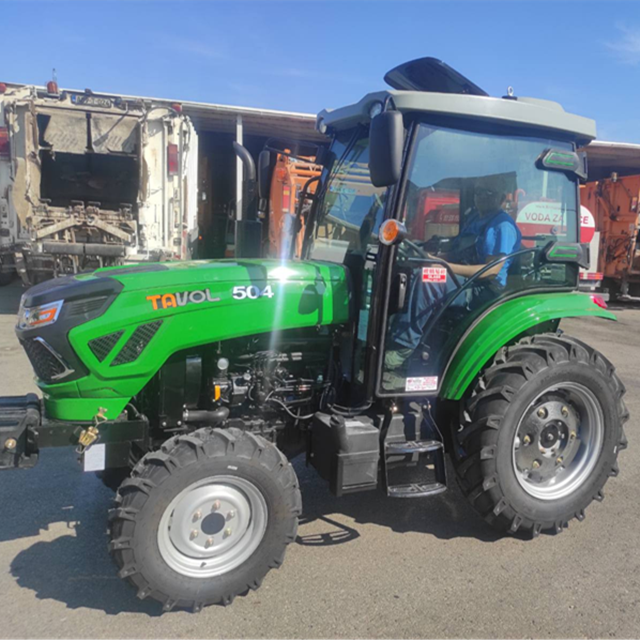
Purchasing a new machine represents a massive capital investment. You are securing a decades-long asset, not buying a disposable tool. A hasty decision locks you into years of mechanical frustration and financial drain. Buyers often fall into a predictable trap during the evaluation phase. They choose machines based on blind brand loyalty. They also obsess over top-line engine horsepower while ignoring actual field requirements. This mismatch wastes capital and destroys productivity.
You need a strict, objective evaluation framework before visiting a dealership. We will help you match machine specifications to your exact operational outcomes. You will learn how to assess implement compatibility, evaluate dealer support, and dodge financing pitfalls. By the end of this guide, you can confidently identify the exact Agricultural Tractor your farm needs.
Key Takeaways
Power to the Ground: PTO (Power Take-Off) horsepower matters significantly more than raw engine horsepower for active implements.
Weight and Hydraulics: Lift capacity and machine weight dictate stability and capabilities; a lighter tractor with high horsepower will struggle with heavy ground engagement.
Dealer Proximity: Total Cost of Ownership (TCO) is heavily influenced by local dealer service response times and parts availability.
Future-Proofing: Sizing up 10-15% beyond current needs prevents premature equipment replacement as farm operations scale.
Defining Your Operational Baseline and Success Criteria
Establishing a baseline prevents costly over-purchasing. Many buyers focus on property size rather than actual machine workload. You must define what the machine will do daily. It helps separate emotional wants from operational necessities.
Acreage vs. Application Reality Check
Map your total acreage directly to your active managed acreage. Fifty acres of flat pasture requires entirely different equipment than fifty acres of dense woodlands. You must differentiate between ground-engaging work and surface work. Ground-engaging tasks include deep tillage, plowing, and subsoiling. These require heavy frames and robust axles. Surface tasks include mowing, spraying, and broadcast spreading. These demand lighter footprints to reduce soil compaction. Evaluate your land carefully before looking at specifications.
The "Heaviest Task" Rule
Identify the single most demanding task your machine will perform. This establishes your baseline minimum requirements. Do not size a machine for an average day. Size it for your worst-case scenario. Common "heaviest tasks" include:
Lifting wet round bales from a flatbed trailer.
Pulling a multi-bottom plow through heavy clay soils.
Running a large batwing rotary cutter in dense brush.
Transporting fully loaded grain carts up steep inclines.
If you cannot accomplish your heaviest task safely, the entire investment fails. Calculate the weight, lift capacity, and hydraulic flow needed for this specific chore.
Operator Competency and Comfort
Assess who will operate the equipment daily. High-horsepower machines require extensive training. Less experienced operators benefit from simplified controls. Consider hydrostatic transmissions for novice operators. They function much like a golf cart. Gear-driven machines require clutching and rev-matching, demanding higher skill levels.
Factor in climate and chemical exposure. A factory cab enclosure adds upfront expense. However, it provides essential protection from extreme heat, freezing winds, and toxic pesticide drift. If you spray chemicals frequently, a pressurized cab is non-negotiable. Comfortable operators work longer hours and make fewer dangerous mistakes.
Categorizing Agricultural Tractors by Application
Manufacturers divide their lineups into distinct classes based on frame size and capabilities. Understanding these categories helps you narrow down your search immediately.
Sub-Compact and Compact Tractors (20–60 HP)
These machines fit perfectly in tight spaces. They utilize smaller frames and lighter axles.
Best for: Smallholdings, landscaping, estate management, and light loader work. They excel at driveway grading, snow removal, and finishing mowing.
Limitations: They lack sufficient weight for heavy draft work. You cannot pull large plows or heavy discs. Their limited hydraulic flow rates result in slow loader cycle times. They struggle to lift large, wet round bales safely.
Utility Tractors (60–100+ HP)
Utility models represent the traditional workhorse of modern farming. They bridge the gap between estate management and commercial production.
Best for: Hay production, livestock feeding, medium-scale row-crop support, and heavy loader operations. They offer robust hydraulic systems and heavier cast-iron chassis.
Limitations: They can be too large for tight orchard or vineyard navigation. Their wide turning radiuses make them clumsy in small barns. You will also experience higher fuel consumption when performing light surface tasks like yard mowing.
Row-Crop and Articulated 4WD Tractors (150–400+ HP)
These industrial giants handle massive acreage and severe continuous loads. They feature massive dual tires or track systems.
Best for: Broadacre farming, heavy continuous tillage, and commercial planting. They provide unmatched pulling power for massive implements.
Limitations: They require extremely high capital expenditure. You need specialized transport to move them between non-contiguous fields. They also demand high-level operator training. Modern row-crop machines feature complex GPS guidance and implement management software.
Chart: Quick Reference Capability Summary
Category
HP Range
Primary Role
Hydraulic Flow
Sub-Compact / Compact
20 - 60 HP
Estate maintenance, light loading
Low (4 - 10 GPM)
Utility
60 - 100+ HP
Haying, livestock, loader work
Medium (12 - 20 GPM)
Row-Crop / Articulated
150 - 400+ HP
Broadacre tillage, planting
High (30 - 100+ GPM)
Core Specifications That Dictate Field Performance
Do not buy a machine based purely on marketing brochures. You must decipher the engineering specifications. Understanding these numbers prevents mismatched equipment and poor field performance.
Engine HP vs. PTO HP
Dealerships often advertise engine horsepower because it represents the highest number. However, engine HP simply measures power at the crankshaft. It does not reflect usable power at the rear of the machine.
You must calculate mechanical loss. Power travels from the engine, through the transmission, and out to the Power Take-Off (PTO) shaft. This journey typically results in a 10-15% power loss. If you buy a 50 HP machine, you might only get 42 HP at the PTO.
Strict Rule: Always size your Agricultural Tractor based on the implement manufacturer’s requested PTO horsepower. A large rotary cutter demands constant PTO power. If you fall short, the implement will bog down the engine constantly.
Transmission Architectures
Your transmission choice completely changes how the machine behaves in the field. Choose based on your primary applications.
Transmission Type
Mechanics
Advantages
Disadvantages
Hydrostatic (HST)
Uses hydraulic fluid to transfer power.
Infinite speed control. No clutching. Perfect for loader work.
Higher power loss to the PTO. Can overheat under heavy draft loads.
Gear / Shuttle Shift
Direct mechanical gear engagement.
Maximum power transfer to the ground. Excellent for plowing.
Requires clutching. Slower directional changes.
Select an HST transmission for frequent forward-and-reverse actions. It dominates loader applications and tight landscaping tasks. Select a Gear or Shuttle transmission for heavy draft work. Direct mechanical links prevent power loss when pulling deep tillage implements.
Hydraulic Capacity and 3-Point Hitch
Hydraulics serve as the lifeblood of modern equipment. Evaluate the hydraulic pump flow measured in Gallons Per Minute (GPM). Low GPM results in agonizingly slow loader cycle times. You will wait endlessly for the bucket to lift and curl. Higher GPM allows you to perform simultaneous actions smoothly.
Verify your 3-point hitch categories. Category 1 fits small implements. Category 2 handles utility-scale attachments. Category 3 serves heavy row-crop tools. Adapting implements between categories causes headaches and structural weaknesses.
Pay close attention to rear lift capacity measurements. Manufacturers often cheat by measuring lift capacity directly at the pivot pins. This artificially inflates the number. Look for the lift capacity measured at 24 inches behind the lift pins. This measurement accurately reflects real-world implement lifting power.
Evaluating Dealer Support and Proximity
Even the finest machines break down. A highly-rated model becomes a massive liability if you cannot secure parts or service quickly. Your relationship with the dealer matters as much as the iron itself.
The Proximity Premium
Calculate the downtime cost of a broken machine. During harvest or planting season, every lost hour costs you significant money. A dealership four hours away cannot provide rapid mobile service. Buying a slightly more expensive machine from a local dealer often saves money long-term. Local technicians can arrive quickly to diagnose sensors or repair hydraulic leaks. Distance kills productivity.
Parts Availability and Compliance
Assess the OEM parts distribution network. Ask the dealer about their parts stocking policies. Do they keep critical hydraulic pumps and engine sensors on the shelf? If they must order everything from an overseas warehouse, you will suffer lengthy delays.
Note Tier 4 Final emissions compliance requirements. Modern diesel engines utilize DEF (Diesel Exhaust Fluid) and DPF (Diesel Particulate Filter) systems. These emission systems require specific ongoing maintenance. Sensors frequently fail. DPF regeneration cycles interrupt workflow. Ensure your local dealer possesses the diagnostic software required to clear engine fault codes.
Warranty Structures
Read the fine print on all warranty documents. Dealerships often tout "10-Year Warranties" to secure a sale. However, you must differentiate between bumper-to-bumper coverage and powertrain-only coverage.
Bumper-to-Bumper: Covers electronics, sensors, hydraulics, and cab climate systems. These usually last only 1 to 2 years.
Powertrain-Only: Covers internal engine components and transmission gears. It rarely covers fuel injectors or hydraulic pumps.
Check for commercial use exclusions. If you use the machine for a landscaping business, the manufacturer might void the standard agricultural warranty.
Implementation Risks and Financing Considerations
Securing the right machine solves only half the puzzle. You must integrate it into your existing fleet safely and navigate the purchase terms wisely.
Attachment Mismatches
Never ignore the risk of attachment mismatches. Buying a machine that cannot safely ballast a front-end loader creates severe rollover hazards. If you max out your loader capacity, the rear wheels lose traction and lift off the ground. You must equip the rear tires with liquid ballast or attach heavy counterweights to the 3-point hitch.
Additionally, check your legacy implements. A new 100 HP machine might tear apart an old rotary cutter designed for a 40 HP frame. Verify PTO shaft lengths and sheer pin ratings before hooking up old equipment.
Supply Chain and Lead Times
Address realistic delivery timelines. Custom-ordered machines feature exact specifications but suffer from unpredictable supply chain delays. You might wait six to ten months for a factory build. Conversely, on-lot inventory provides immediate delivery. However, you might have to accept unwanted features or compromise on tire tread patterns. Plan your purchase well before your busy season begins.
Financing vs. Leasing
Examine financing offers critically. Manufacturers frequently advertise 0% OEM financing. These offers look incredibly appealing. However, they are almost always tied to the full Manufacturer's Suggested Retail Price (MSRP).
Compare this against cash discounts. Dealers often slash thousands off the price for cash buyers. You can often secure a standard loan through a third-party agricultural lender, take the massive cash discount from the dealer, and pay less overall. Run the math on both scenarios before signing any paperwork.
The Shortlisting Logic and Demo Process
You have defined your needs and evaluated the specs. Now you must inspect the physical machines. A thorough inspection separates well-engineered equipment from poorly designed alternatives.
The Walkaround
Inspect the layout of daily maintenance points. Open the hood and locate the oil dipsticks, air filters, and fuel-water separators. Crawl under the loader arms and find every grease zerk.
Hard-to-reach maintenance points inevitably lead to neglected maintenance. If you must remove structural panels just to check the hydraulic fluid, your operators will skip it. Poor layout results in dry pivot pins, worn bushings, and premature engine failure. Demand accessible service points.
The Live Demo
Never buy a machine without testing it under load. Driving across a smooth dealership parking lot teaches you nothing. Demand a realistic live demo.
Test the loader cycle times while the bucket is full of dirt or gravel. Observe the turning radius while engaged in 4WD. Listen to the transmission. Does it whine excessively under strain? Check the shuttle shift transition. It should feel smooth and predictable, not jerky and violent. A proper demo reveals ergonomic flaws and mechanical weaknesses instantly.
Questions for the Dealer
Hold the sales representative accountable. Ask highly specific questions during the demo process:
"What is the typical turnaround time for routine warranty work during harvest season?" This exposes their service department's actual capacity.
"Are the tires loaded with ballast, and is that included in the quoted price?" Dealers sometimes quote lower prices by excluding necessary rear ballast.
"Do you provide a loaner machine if mine suffers a catastrophic failure under warranty?" This guarantees you maintain productivity during major repairs.
Conclusion
Buying a new machine goes far beyond admiring fresh paint and big tires. It remains a strict exercise in matching mechanical capabilities to specific business outcomes. You cannot just acquire maximum horsepower and hope for the best. You must align transmission types, hydraulic flow, and dealer proximity with your daily operational realities.
Take immediate action today. Audit your current implement fleet. Define your single heaviest task honestly. Calculate your necessary PTO horsepower based on implement demands. Once you compile this data, schedule comparative field demos with at least two local dealerships. Let the numbers and the performance dictate your final decision.
FAQ
Q: How many hours can I expect a new agricultural tractor to last?
A: Engine life expectancy relies entirely on strict maintenance. A well-maintained diesel engine typically lasts between 4,000 to 10,000+ hours. Clean air filters, regular oil changes, and proper cooling system flushes push longevity past the 10,000-hour mark. Neglected machines often fail before reaching 3,000 hours.
Q: Should I buy 2WD or 4WD (MFWD)?
A: You should almost always purchase 4WD (Mechanical Front Wheel Drive). It is absolutely necessary for safe loader work, providing essential front-axle traction when moving heavy materials. Despite the higher upfront cost, MFWD prevents getting stuck in mud and holds significantly better resale value.
Q: Is it better to buy a larger used tractor or a smaller new one?
A: Frame your decision around your mechanical aptitude and financial setup. A new machine offers modern safety features, warranty protection, and lower financing rates. A larger used machine provides more raw pulling power per dollar, but demands immediate repair budgets and high technical troubleshooting skills.
Q: Do I need a cab or an open-station (ROPS) tractor?
A: Evaluate this based on climate, tasks, and budget. If you spray chemicals frequently or work in extreme winter conditions, a factory cab is necessary for safety and health. If you navigate low-clearance orchards or operate on a tight budget, an open-station ROPS model works best.