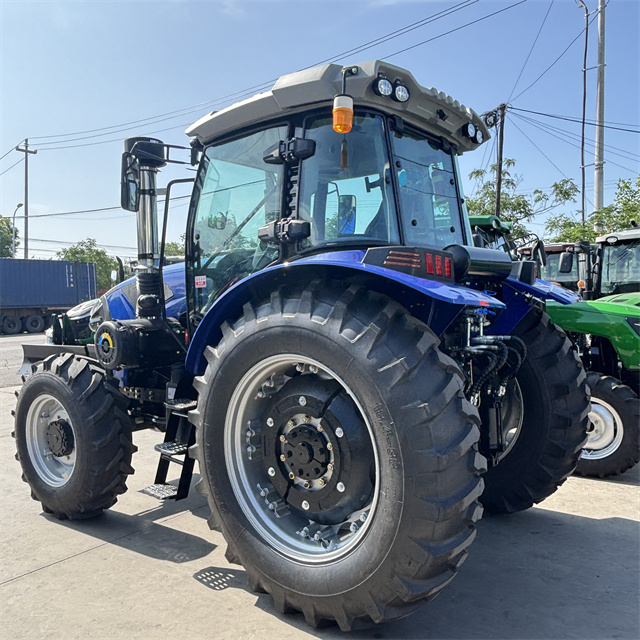
For procurement teams and farm operators, tire selection is rarely about simple brand preference. It operates as a critical variable governing power-to-ground efficiency, daily fuel expenditure, and ultimate crop yield. Equipping an Agricultural Wheel Tractor with the wrong tire profile cascades into immediate operational inefficiencies. These hidden issues range from excessive wheel slip to severe soil compaction across your fields. Poor rubber choices drain profitability long before you even notice physical tread wear.
Moving beyond basic dimensions requires evaluating investments through a strict performance perspective. We present 12 verifiable facts below to strengthen your procurement strategy. They will guide your next decision-stage evaluation and guarantee maximum efficiency.
Key Takeaways
TCO over Initial Price: Radial and IF/VF (Increased Flexion/Very High Flexion) technologies command a premium but actively reduce fuel consumption and soil compaction penalties.
Application Dictates Spec: Roading frequency, heavy draft work, and specific implement loads must drive your tread pattern and compound selection.
Maintenance is Non-Negotiable: Even top-tier tires fail prematurely without strict adherence to application-specific inflation and ballasting protocols.
Vendor Reliability: A tire’s warranty framework and local dealer support network are just as critical as its physical load index.
The Business Impact of Tire Selection (ROI & Lifecycle Economics)
Framing the financial and operational baseline is your first step in tire procurement. The right tire acts as a multiplier for your equipment’s overall power delivery. We must examine how mechanical efficiency translates directly into financial returns.
Target slip rates for optimal tractive efficiency typically sit between 8% and 15%. Operators often misunderstand this metric. They assume zero slip means maximum efficiency. In reality, some slip protects the transmission.
Excessive slip wastes fuel and accelerates tread wear rapidly. Your tractor burns expensive diesel just spinning in the dirt. Conversely, insufficient slip (below 8%) damages the drivetrain via power hop. Power hop occurs when the tires grip too aggressively. The machine bounces, causing excessive torque loads on internal gears. You must calibrate tire pressure and ballast to hit that 8-15% sweet spot.
Common Mistake: Ignoring slip monitors during field operations. You should actively monitor these readouts and adjust ballast accordingly.
Fact 2: Radial vs. Bias is a Long-Term Financial Decision
Bias-ply tires offer a lower upfront cost. They feature stiffer sidewalls, providing excellent hillside stability. However, they suffer from significantly smaller footprints. This reduces traction and increases field damage.
Radial tires deliver superior lifecycle value for any primary Agricultural Wheel Tractor. They flex more easily, creating a larger, flatter footprint. This design reduces fuel consumption by minimizing rolling resistance. It also extends operational lifespan through more even tread wear. You pay more at the dealership, but you recoup the premium through daily diesel savings.
Compaction restricts root growth and blocks water infiltration. This invisible damage directly impacts your per-acre yield. Heavy machinery squeezes the pore spaces out of the soil. When roots cannot penetrate deeply, plants become highly vulnerable to drought conditions.
Tire selection remains your primary mechanical defense against subsoil compaction. Specifically, footprint area and operating pressure dictate the severity of soil damage during heavy pass operations. A tire running at 12 psi causes drastically less compaction than one running at 25 psi. You must prioritize high-flotation options if you farm delicate, moisture-retaining soils.
Modern Tire Technology & Evaluation Dimensions
Demystifying high-end tire technologies helps you match specific features to your operational outcomes. Premium engineering requires a deep understanding of load dynamics and footprint geometry.
Fact 4: IF and VF Tires Fundamentally Alter Load Capacities
IF (Increased Flexion) tires carry 20% more load at standard pressure. Alternatively, they carry the same standard load at 20% less pressure. This flexibility changes how you manage heavy implements.
VF (Very High Flexion) tires push this engineering threshold even further. They increase load capacity to 40% over standard radials. This offers maximum soil protection and load flexibility. You no longer require constant pressure adjustments when switching from field tasks to road transport.
Tire Technology Load Capacity Comparison
Tire Classification
Load Capacity Increase (vs Standard)
Pressure Reduction Capability
Primary Benefit
Standard Radial
Baseline (0%)
None
General efficiency and longevity
IF (Increased Flexion)
+ 20%
- 20%
Better traction, reduced compaction
VF (Very High Flexion)
+ 40%
- 40%
Maximum soil protection, versatility
Fact 5: Footprint Size Matters More Than Tread Depth
Tractive efficiency relies on the total square inches of rubber on the ground. It does not just depend on the aggressiveness of the lugs. Deep lugs on a narrow tire simply dig deeper ruts. This wastes energy and damages your field profile.
A longer footprint provides better traction and causes less rutting than a wider, over-inflated tire. Radial and VF technologies naturally lengthen the tire footprint. This longer contact patch engages more soil without tearing it up. It acts somewhat like a track system, distributing weight lengthwise along the travel path.
Fact 6: Ballasting Requirements Change with Tire Tech
Liquid ballasting involves filling tires with heavy fluid like calcium chloride or beet juice. It historically added cheap weight to bias-ply tires. However, liquid stiffens the tire body. This largely negates the engineered flex benefits of premium radial, IF, or VF tires.
Modern evaluation frameworks strongly favor cast-iron wheel weights. Here is why you should avoid liquid ballast in premium tires:
Preserves Sidewall Flex: Cast iron allows the tire sidewall to deflect as designed.
Maintains Footprint: Proper flex ensures the tread stays flat against the soil.
Prevents Rim Corrosion: Many liquid ballasts rust steel rims over time.
Improves Ride Quality: Air-filled tires absorb shock much better than fluid-filled ones.
Operational Realities for the Agricultural Wheel Tractor
Scalability, implementation constraints, and matching tires to daily realities dictate your long-term success. You must evaluate how your machinery physically moves through its environment.
Fact 7: Roading vs. Field Use Demands Different Rubber Compounds
High-speed roading accelerates the wear of standard agricultural lugs. Asphalt generates intense heat buildup and extreme friction. Soft, grippy rubber designed for mud will degrade rapidly on concrete.
Fleets spending more than 30% of their time in transport require specialized solutions. You should specify hybrid tread designs or specialized "R-1W" compounds. These deep-tread tires feature thicker lugs and heat-dissipating rubber mixtures. They prevent the center lugs from wearing flat prematurely. Always audit your field-to-road ratios before finalizing a purchase.
Mechanical Front-Wheel Drive (MFWD) tractors require a precise lead/lag ratio. Usually, this means a 1% to 5% front-wheel lead. The front tires must pull slightly faster than the rears. This tension keeps the Agricultural Wheel Tractor steering accurately under heavy draft loads.
Mismatching tire rolling circumferences causes catastrophic drivetrain issues. If you replace a single axle with taller tires, you alter the factory ratio. This mismatch severely damages the transfer case and greatly reduces pulling efficiency. You must calculate rolling circumferences mathematically when mixing tire brands or models.
Fact 9: Stubble Damage is a Preventable Operational Risk
Modern genetically modified crops, like Bt corn, feature extremely tough stalks. Harvest leaves behind rigid stubble that easily punctures standard tire sidewalls. This creates massive downtime during tight harvest windows.
Operations in high-stubble environments must specify tires engineered for these hazards. Look for specialized aramid or Kevlar-reinforced belts. Manufacturers also design stubble-deflecting tread geometries to push stalks away from the vulnerable sidewall. Installing mechanical stubble crushers on your tractor header also drastically extends tire life.
Implementation, Risks, & Shortlisting Logic
Mitigating rollout risks and understanding maintenance realities ensures your procurement succeeds. Final vendor selection relies on more than just reading a spec sheet.
Fact 10: Under-Inflation is the Leading Cause of Premature Failure
Operating below the manufacturer's load/inflation tables causes catastrophic damage. The sidewall bends too far, generating internal heat. This leads to layer separation and immediate bead unseating.
Proper implementation requires strict maintenance protocols. Consider these best practices:
Invest in high-quality, calibrated digital pressure gauges.
Check tire pressures weekly, especially during temperature swings.
Weigh your heaviest implements on a scale to find your true axle load.
Install Central Tire Inflation Systems (CTIS) for dynamic, on-the-go pressure adjustments.
Fact 11: Warranty Structures Differ Widely by Manufacturer
Evaluating a tire must include a thorough audit of the warranty. Do not assume all premium brands offer identical protection. Look specifically for prorated replacement terms extending beyond five years.
You need coverage for stubble damage and field-hazard protections. Opaque warranties or "defect-only" clauses stand out as major red flags during the procurement phase. A strong warranty proves the manufacturer trusts their casing integrity. Read the fine print regarding mandatory registration and maintenance logs.
Fact 12: Dealer Support Outweighs Initial Purchase Price
Tire downtime during a critical planting or harvest window costs exponentially more than the tire itself. A blown tire can halt a $500,000 combine or tractor for days. Yield losses accumulate every hour the machine sits idle.
Shortlisting should prioritize manufacturers with robust local dealer networks. You need a partner capable of rapid on-site replacement. Ensure your dealer offers mobile mounting services and carries your specific tire sizes in stock. A cheaper tire from a distant supplier becomes incredibly expensive when you lose three days waiting for freight delivery.
Conclusion
Purchasing tires for an agricultural wheel tractor serves as a major investment in power delivery, fuel efficiency, and agronomic health. Getting this specification wrong jeopardizes your entire mechanical ecosystem. The right tires protect your soil, preserve your drivetrain, and stretch your fuel budget.
We strongly recommend basing your final shortlist on hard operational data. Weigh your specific split between field draft work and high-speed road transport. Identify your heaviest implement load indices. Finally, assess your local dealer support capability before signing any purchase orders.
Your immediate next steps should include the following actions:
Conduct a comprehensive fleet audit of current tire wear patterns.
Identify signs of power hop, stubble damage, or uneven lug wear.
Calculate your exact axle load and speed requirements.
Initiate vendor discussions armed with precise data.
FAQ
Q: How do I match the tire load index to my agricultural wheel tractor?
A: Calculate the maximum weight the tractor will carry, including heavy three-point mounted implements and ballast, and divide by the axle configuration to find the minimum required load index per tire.
Q: Are VF (Very High Flexion) tires worth the premium over standard radials?
A: Yes, if your operation involves heavy draft work, highly sensitive soils, or requires carrying heavy implements at varying speeds without constantly adjusting air pressure. The return is realized in fuel savings and yield preservation.
Q: What is the standard lifespan of an ag tire?
A: Depending on the compound and roading frequency, a premium radial tire typically lasts between 4,000 and 6,000 operational hours. Excessive road transport or improper inflation can cut this lifespan in half.