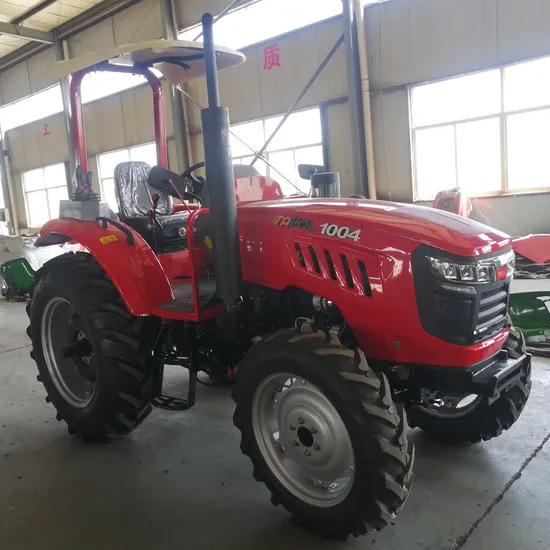
Acquiring farm machinery represents far more than a basic equipment purchase. You are executing a long-term capital allocation. This decision dictates your overall farm productivity for years to come. The current equipment market presents profound complexity for buyers at every level. You face widespread spec-sheet inflation from manufacturers eager to highlight peak numbers. Varying regional emission standards further complicate your maintenance expectations. Furthermore, the traditional lines between standard utility machines and heavy-duty models increasingly blur. Farm owners need absolute clarity amidst this noise. This guide provides an evidence-based framework to evaluate your options systematically. We aim to help farm owners and fleet managers shortlist and procure the right Agricultural Wheel Tractor based strictly on operational realities rather than slick marketing claims. You will learn how to properly match power ratings, assess hydraulic capabilities, and mitigate long-term implementation risks effectively.
Key Takeaways
Match PTO HP, Not Just Engine HP: Real-world implement performance relies on Power Take-Off (PTO) horsepower; over-indexing on raw engine output often leads to misaligned procurement.
Versatility is Dictated by Hydraulics: An agricultural wheel tractor is only as versatile as its hydraulic flow rate (GPM) and hitch category capabilities.
TCO > Upfront Cost: Dealership proximity, parts availability, and emissions system maintenance routinely outweigh initial purchase savings over a 10-year lifecycle.
Precision vs. Repairability: Buyers must balance the efficiency gains of advanced electronics with the implementation risk of complex, dealer-only repairs.
Defining the Business Case: The Role of an Agricultural Wheel Tractor
Operators frequently mischaracterize their heavy machinery as single-task tools reserved for specific seasons. We must frame the modern asset correctly. It functions as a dynamic, multi-role platform. You rely on it heavily for aggressive spring tillage and precision planting. Later, it handles crop spraying, baling, and heavy transport duties. This machine forms the literal backbone of your daily operations. A versatile platform prevents machinery from sitting idle during off-peak months.
Establishing clear success criteria is mandatory for any procurement process. Your return on investment relies entirely on achieving high seasonal utilization rates. A machine parked in the shed generates zero value. Furthermore, success requires experiencing minimal unscheduled downtime during critical weather windows. Weather forces farmers to execute massive tasks rapidly. Reliable equipment guarantees you capture those narrow operational windows perfectly.
We must address the versatility mandate directly. Consolidating your diverse fleet requirements into a properly sized Agricultural Wheel Tractor reduces overall operational overhead. It eliminates costly labor redundancies across your entire farm. Your operators spend significantly less time switching between highly specialized, single-use machines. Consequently, they spend more time executing critical, time-sensitive field tasks. Fleet consolidation streamlines maintenance schedules and simplifies parts inventory substantially.
Core Evaluation Framework: Sizing and Performance Realities
Decoding Horsepower Specifications (The Spec-Sheet Trap)
Manufacturers routinely highlight peak engine horsepower to attract potential buyers. This prominent number creates a dangerous spec-sheet trap. You must clearly distinguish between Engine HP, Drawbar HP, and PTO HP. Engine HP measures raw mechanical output directly at the flywheel. Drawbar HP represents the actual pulling force available at the rear hitch. PTO HP measures the usable power delivered to your active implements. Most modern active tools rely exclusively on PTO power to function efficiently.
Executing ground-engaging tasks like deep tillage.
PTO HP
Power Take-Off Shaft
Running active implements like balers and rotary mowers.
You must establish a rigorous baseline methodology for calculating actual horsepower requirements. Always base this critical calculation on the single most demanding implement currently in your fleet. For example, a heavy round baler dictates your minimum PTO threshold. Calculate the implement's stated requirement and add a twenty percent safety buffer. This buffer prevents the machine from bogging down during tough, muddy conditions. It also extends engine life by preventing continuous maximum-load operation.
Chassis Size, Weight Distribution, and Traction
Physical footprint fundamentally dictates field performance and maneuverability. You must address the physical footprint in relation to your specific field layouts. Wheelbase length significantly affects longitudinal stability and overall ride quality. A shorter wheelbase offers a tighter turning radius. This proves essential for navigating small paddocks and narrow gate entrances. Conversely, longer wheelbases stabilize heavy planters across uneven terrain.
You must carefully analyze the constant trade-off between traction power and soil compaction risks. Heavy draft work fundamentally requires substantial machine weight. You achieve this through cast-iron weights or liquid tire ballast. However, excessive weight drastically increases your soil compaction risks. Severe compaction directly stunts root growth and reduces eventual crop yields. You must balance adequate pulling traction against the vital need to preserve long-term soil health. Adjusting tire pressures seasonally helps mitigate these ground pressure issues effectively.
Implement Compatibility: The True Driver of Versatility
Hydraulic System Capacity
Hydraulic capability defines true mechanical versatility on the farm. You must evaluate the Hydraulic Flow Rate meticulously. Manufacturers typically measure this critical metric in Gallons Per Minute (GPM) or Liters Per Minute (LPM). High-demand implements require robust, continuous hydraulic flow to operate smoothly. Large air seeders demand massive hydraulic reserves to drive internal fans. Undersized hydraulic pumps cause implements to stall or operate erratically.
Compare open-center and closed-center hydraulic systems carefully before purchasing. Open-center systems pump fluid continuously through the valve block. They generally suit simpler, utility-level tasks and older implements. Conversely, closed-center systems provide high-pressure fluid strictly on demand. They offer vastly superior responsiveness for heavy-duty, modern implements. You save valuable diesel fuel using closed-center designs. They also reduce unnecessary heat build-up within the hydraulic reservoir, prolonging component life.
Linkage and PTO Standards
You must match your 3-point hitch categories directly to your specific farm requirements. Hitch geometry determines exactly which tools you can attach safely. Linkage sizes range broadly from Category I to Category IV.
Category I: Best suited for compact models handling light chores.
Category II: Fits mid-range machines utilized for general hay production.
Category III: Ideal for heavy row-crop machines executing broadacre tillage.
Category IV: Reserved exclusively for massive machinery pulling articulated implements.
Evaluate your PTO configurations just as closely. Most farms utilize standard 540 RPM or heavy-duty 1000 RPM setups. Ensure the new machine fully supports your existing equipment inventory. You must also evaluate independent versus transmission-driven setups. Independent PTO setups operate entirely separate from the main transmission clutch. They provide exceptionally smoother engagement for heavy implements. They prevent dangerous stalling when you stop forward momentum suddenly.
Assessing Implementation Risks: Durability, Maintenance, and TCO
Mechanical Simplicity vs. Precision Agriculture Integration
Modern agricultural equipment features incredibly impressive electronic integration. However, you should adopt a highly skeptical lens regarding "smart" features. Evaluate the tangible operational benefits of ISOBUS compatibility and auto-steer carefully. These advanced systems undeniably improve pass-to-pass accuracy in large fields. They reduce operator fatigue during long planting shifts. They prevent expensive seed and fertilizer overlap.
However, they introduce significant implementation risks. Complex sensor failures stop all fieldwork immediately. Unexpected software lockouts force you to await expensive dealer intervention. You must balance potential efficiency gains against practical repairability. Mechanical simplicity often keeps older machines running reliably. A machine you can repair yourself saves crucial days during peak harvest. Consider whether your local environment truly requires extreme digital precision.
Emissions Compliance and Engine Longevity
Strict emission regulations continuously reshape modern engine design. You must understand the harsh maintenance realities of Tier 4 Final and Stage V engines. These advanced powerplants require constant Diesel Exhaust Fluid (DEF) management. Storing and handling DEF adds logistical complexity to your farm. They also undergo active Diesel Particulate Filter (DPF) regeneration cycles automatically.
Regeneration burns off accumulated soot inside the exhaust system. This complex process demands exceptionally high engine operating temperatures. Excessive engine idling reduces longevity and prematurely clogs these expensive filters. Train your operators to run equipment at proper, heavy loads. Correct operation ensures these sensitive emission systems function reliably over many years. Ignoring emission system warnings inevitably leads to catastrophic engine derating.
The Cost of Downtime and Dealership Dependency
Your machine remains only as reliable as your local dealer network. You face massive operational risks if proprietary parts remain unavailable during spring planting. Emphasize dealer capability over brand loyalty. Proximity matters immensely when sudden mechanical failures occur in the field.
Evaluate local support infrastructure using highly strict metrics. Request their parts availability Service Level Agreement (SLA) in writing. Ask specifically about average dispatch times for mobile field technicians. A cheap machine becomes incredibly expensive if it sits broken for three weeks. Strong dealership support minimizes unscheduled downtime drastically. Fast, competent responses keep your operation moving forward during chaotic weather events.
Shortlisting Logic and Procurement Next Steps
Building the Vendor Vetting Checklist
Standardize your evaluation dimensions across all competing brands. This logical approach prevents costly emotional buying decisions. Build a structured vendor vetting checklist before scheduling dealership meetings. Compare identical metrics to expose true equipment value.
Compare comprehensive warranty terms, strictly noting all coverage exclusions.
Evaluate guaranteed buy-back agreements offered by the dealership.
Assess realistic projected trade-in values after five years of heavy use.
Review technician availability during your most critical seasonal harvest windows.
Structuring a Rigorous On-Farm Demonstration
Never rely solely on basic lot-testing at the local dealership. Dealership lots feel artificially smooth and incredibly easy to navigate. Real farms present deep mud, steep hills, and heavy crop residue. Advise your team against making procurement decisions based on brief parking lot drives. Such tests hide critical performance flaws.
Outline exactly how to conduct a rigorous on-farm demonstration instead. Use your own specific implements for the entire test duration. Operate the machine strictly under your actual soil conditions. Ensure the dealer delivers the unit fully ballasted for draft work. This demanding approach reveals genuine performance limits quickly. It exposes hidden hydraulic weaknesses and traction issues before you sign the contract.
Conclusion
Procuring the ideal farm machinery requires rigorous, unsentimental analysis. The best equipment balances implement-matched power, hydraulic versatility, and robust local support infrastructure. You must look past flashy marketing claims to assess real-world capabilities. Prioritize PTO horsepower and hydraulic flow over raw engine output. Remember that mechanical simplicity often guarantees superior uptime during challenging seasons. Take immediate action to audit your current implement requirements thoroughly today. Document your heaviest loads and strictest hydraulic demands. Contact a trusted sales engineer to schedule an in-field capability assessment. Taking these decisive steps protects your operation against unscheduled downtime and unmatched implement setups.
FAQ
Q: What is the difference between Engine HP and PTO HP when evaluating an agricultural wheel tractor?
A: Engine HP measures raw power generated at the flywheel. It ignores internal mechanical losses. PTO HP measures actual power delivered to the power take-off shaft. Parasitic loss from the transmission and hydraulic systems reduces available power. PTO HP remains the critical metric for running active implements like balers.
Q: How do I choose between a utility agricultural wheel tractor and a row-crop tractor?
A: Your choice depends on crop type and primary application. Utility models feature lower clearance and tighter turning radii. They excel at loader work and basic chores. Row-crop models provide high ground clearance for driving over standing crops. They possess heavier frames suited for intense draft work and precision planting.
Q: Are tracked tractors replacing agricultural wheel tractors?
A: Tracked machines offer lower soil compaction for heavy draft applications. However, they are not entirely replacing wheeled models. Wheeled machines retain superior versatility across diverse tasks. They provide significantly faster road speeds for transport. Furthermore, wheeled setups generally incur lower undercarriage maintenance costs compared to complex track systems.
Q: What is a realistic lifespan for a modern agricultural wheel tractor before major overhauls?
A: Modern machines typically deliver 8,000 to 12,000 hours of service before requiring major engine or transmission overhauls. This lifespan depends heavily on load intensity and rigorous maintenance schedules. Regular fluid sampling and timely filter replacements significantly extend operational life and maximize your long-term equipment value.