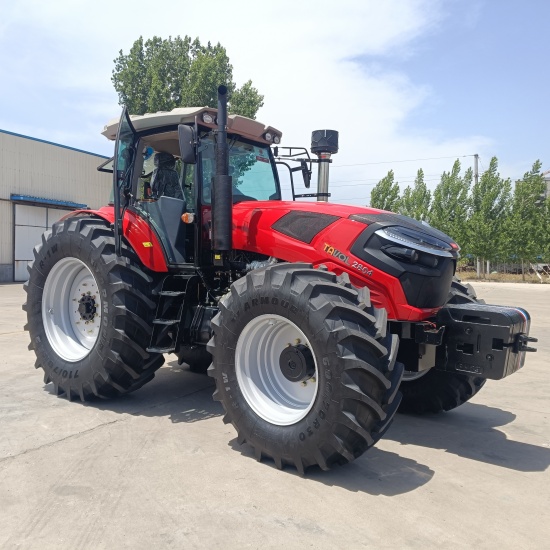
Purchasing heavy machinery represents a high-stakes capital expenditure. It directly impacts your seasonal yield. It also dictates your daily operational efficiency. You are not just buying metal and rubber. You are securing a critical asset for your farm's productivity. You actively compare models. You evaluate dealer networks. You scrutinize financing terms. Our objective here is strictly evidence-based. The goal is simple. We want to match machine capabilities to your exact farm requirements. We aim to minimize unexpected downtime and lifetime operational expenses. This guide bypasses basic top-of-funnel definitions. You will learn how to map operational demands to specific specifications. You will discover the financial realities separating new and used models. You will master a field-tested inspection framework to avoid costly mistakes. Follow these guidelines to make a strategic acquisition.
Key Takeaways
Match Power to the Task, Not the Tractor: Implement demands dictate Power Take-Off (PTO) horsepower; engine horsepower alone is a vanity metric.
Prioritize Dealer and Parts Proximity: A cheaper machine loses its ROI advantage if proprietary parts are weeks away during peak harvest or planting windows.
Verify Safety and Compliance Standards: Always check for certified Roll-Over Protective Structures (ROPS) and understand the maintenance realities of modern emissions systems (Tier 4/DEF).
Defining Operational Requirements: Framing Your Success Criteria
You must establish a rigid baseline for what your farm actually needs. Do this before looking at specific brands or models. Map your acreage and primary applications first. Define your main uses clearly. Tillage, loader work, baling, and row-crop transport all demand different specifications. These tasks dictate chassis size. They influence weight distribution. They also determine your required wheelbase. A large row-crop operation requires a long wheelbase for stability. A livestock operation requires a compact chassis for maneuverability in tight barns.
Engine Horsepower vs. PTO Horsepower
You must understand the critical difference between engine horsepower and PTO horsepower. Engine horsepower measures raw power at the crankshaft. PTO horsepower measures usable power delivered to run your attached implements. Engine horsepower alone is often a vanity metric. Never buy based solely on the engine rating. Use this decision matrix to calculate your exact needs:
Identify the most demanding implement you currently own. Alternatively, identify the largest implement you plan to purchase soon.
Check the manufacturer's stated PTO horsepower requirement for that specific implement.
Add a 10-15% power buffer to this baseline number. This buffer handles tough soil conditions. It also compensates for steep field inclines.
Finding the right Agricultural Tractor means aligning these PTO numbers perfectly with your daily implement demands.
Hydraulic Capacity and Hitch Categories
Evaluate your hydraulic capacity rigorously. Modern implements demand high hydraulic flow rates. We measure this in Gallons Per Minute (GPM). An older implement might only need 10 GPM. A modern vacuum planter might demand 30 GPM to operate efficiently. Verify your standard 3-point hitch categories. Category I, II, or III hitches must match your existing equipment. Using adapter bushings is an option, but native compatibility ensures stronger linkage and better draft control.
Transmission Selection
Choose your transmission based on operator experience and primary application. The wrong transmission creates operator fatigue. It also slows down your field operations.
Transmission Type
Best Suited For
Key Advantages
Common Mistakes
Hydrostatic (HST)
Loader work, landscaping, frequent direction changes.
Infinite speed control without clutching. Easy for novice operators.
Overheating the fluid during heavy, continuous draft work.
Gear-Driven
Heavy draft work, tillage, constant field speeds.
Maximum power transfer to the wheels. High durability.
Selecting the wrong gear and lugging the engine.
PowerShift
Row-crop farming, large acreage operations.
Shifting under load without clutching. Seamless power delivery.
New vs. Used Agricultural Tractors: Risk & ROI Analysis
You face a major decision regarding new versus used equipment. We break down the financial and operational trade-offs objectively. Both paths offer distinct advantages. Both paths carry unique operational risks.
The Case for New Equipment
New equipment offers predictable operational expenses. You secure comprehensive factory warranties. You also gain advanced precision-ag technology integration natively built into the cab. This reduces third-party monitor clutter. However, you must acknowledge a major caveat. Modern Tier 4 emissions standards require stricter operational habits. You must manage Diesel Exhaust Fluid (DEF). You must understand Diesel Particulate Filter (DPF) regeneration cycles. Excessive idling clogs these filters rapidly. You cannot operate modern diesel engines the same way you operated older models.
The Case for Used Equipment
A used machine significantly lowers your initial depreciation hit. Pre-emissions models also let you avoid complex electronics entirely. Many farmers prefer older mechanical injection systems. You must mitigate risks properly when buying used. Learn how to read equipment inspection reports thoroughly. Understand auction condition grades. Define your threshold for "acceptable hours." This threshold changes based on engine type and maintenance history. A well-maintained diesel engine at 4,000 hours often represents a better buy than a neglected machine at 1,500 hours.
Residual Value Considerations
Brand reputation dictates future resale value. Regional market demand heavily impacts your trade-in asset value. A dominant brand in your specific county commands a premium later. A lesser-known brand might suffer severe depreciation. Evaluate local auction results to gauge long-term residual value trends.
The Mechanical Inspection Framework for Used Farm Tractors
Bring a highly skeptical mindset to any inspection. Rely on a field-tested checklist. You want to avoid buying someone else's problem. Clean paint often hides severe mechanical issues. We recommend hiring an independent mechanic if you lack diesel experience.
Engine and Powertrain Diagnostics
Look deeply into the powertrain. Check for excessive engine blow-by. You do this by carefully removing the oil fill cap while the engine runs at operating temperature. A light vapor is normal. Heavy puffing smoke indicates worn piston rings. Inspect the exhaust color under heavy load.
Black Smoke: Often indicates unburned fuel. Check air filters and fuel injectors.
Blue Smoke: Indicates burning oil. This signals worn rings or valve guides.
White Smoke: Indicates coolant entering the combustion chamber. This strongly suggests a blown head gasket.
Hydraulic and PTO Integrity
Check the hydraulic fluid condition carefully. Milky or cloudy fluid indicates water ingress. This ruins hydraulic pumps quickly. Test the PTO engagement practically. Connect the machine to a dummy load like a heavy rotary cutter or a dynamometer. Listen closely during engagement. Watch for clutch slippage. Listen for excessive gear whine inside the rear housing.
Structural and Safety Checks
Walk around the machine slowly. Inspect all loader pins for excessive play. Look closely at frame welds for hairline cracks. Check the front and rear axle seals for weeping fluids. Do not ignore minor leaks. They escalate quickly under field stress.
Certain items are entirely non-negotiable. Verify the presence of an OSHA-compliant ROPS. Test the functional safety interlock switches. The machine should never start if the PTO is engaged. Never compromise on operator safety.
Maintenance Log Verification
Demand verifiable service records. Look specifically for regular transmission fluid changes. Check for regularly greased zerks on pivot points. A meticulous logbook adds immense value to a used machine. Lack of records assumes lack of maintenance.
Dealer Support, Parts Availability, and Right to Repair
Post-purchase operational security is vital. You must minimize your downtime effectively. A broken machine becomes a massive liability during peak seasons.
The "Uptime" Evaluation
If a machine breaks down and proprietary parts take three weeks to arrive, you lose money. Crop windows wait for no one. Evaluate the proximity of the nearest authorized service center carefully. An optimally supported Agricultural Tractor keeps your farm running during crucial harvest days. Calculate the exact driving distance to the dealer's parts counter.
Parts Ecosystem
Assess OEM versus aftermarket parts availability. Look at your specific local region. Popular models boast robust aftermarket support. This drives down maintenance costs significantly. Rare models trap you into buying expensive OEM components exclusively.
Service Level Agreements (SLAs) and Warranties
Scrutinize the actual warranty coverage. Powertrain coverage differs greatly from electronics coverage. Check if the dealer offers on-farm mobile service. You need this mobile support during critical seasonal windows. Ask the service manager about their standard response times for field breakdowns.
Review the exact mileage limits for mobile service calls.
Clarify whether software updates are included or billed separately.
Confirm if the dealer provides loaner equipment during major overhauls.
Diagnostic Accessibility
Consider the brand's right-to-repair policies. Do they allow owners access to basic diagnostic codes? Or does every single sensor fault require a paid dealer technician visit? Locking owners out of software diagnostics creates immense operational friction. Prioritize models offering transparent error code readings.
Structuring the Purchase: Financing, Insurance, and Asset Protection
Understand the financial mechanics deeply. Finalizing the acquisition requires strategic planning. You must protect the asset while maximizing your capital efficiency.
Financing Terms and Capital Allocation
Compare manufacturer-subsidized rates diligently. New models often feature aggressive subsidized financing. You might see zero-percent interest options. Compare these subsidized offers against traditional ag-lender loans for used machinery. Sometimes, a higher purchase price on a new model yields lower monthly payments due to superior financing terms.
Farm Equipment Insurance
Do not confuse standard liability with proper equipment protection. You must differentiate between standard farm liability and specific inland marine policies. You need specialized policies covering collision, rollover, and transit damage. Fire and theft coverage are also mandatory. Note how lenders require specific coverage limits before they release funds. Your insurance agent needs the exact serial numbers and replacement values immediately.
Tax Implications (Section 179)
Explore the potential for accelerated depreciation. Agricultural capital purchases often qualify for Section 179 deductions. This allows you to deduct the full purchase price of qualifying equipment during the current tax year. This drastically lowers your taxable income. We advise immediate consultation with a certified CPA. Tax codes change annually. Properly structuring the depreciation schedule maximizes your financial leverage.
Conclusion
We approach the final stages of the evaluation funnel systematically. First, define your exact PTO and hydraulic requirements based on implements. Second, choose between new and used models based on your CapEx limits and mechanical aptitude. Third, rigorously vet the physical machine using a comprehensive field checklist. Finally, vet the dealer network to guarantee peak-season uptime.
Your next steps require decisive action. Finalize your required implement list today. Request comprehensive inspection reports on any shortlisted models from dealers or auction houses. Schedule on-site field demonstrations. Make your final acquisition based purely on data, proven capability, and local support infrastructure.
FAQ
Q: What is a good amount of hours for a used agricultural tractor?
A: Gas and diesel engines have very different life expectancies. A well-maintained diesel engine at 4,000 to 5,000 hours usually sits at mid-life. However, poor maintenance kills engines rapidly. A badly maintained diesel can fail catastrophically at 2,000 hours. Always prioritize verified maintenance records over raw hour counts.
Q: What is the difference between Engine HP, Drawbar HP, and PTO HP?
A: Engine HP measures raw output at the crankshaft. PTO HP measures the specific power delivered to run your attached implements. Drawbar HP measures the actual pulling power at the hitch. You should always base your purchasing decisions purely on PTO and Drawbar HP capabilities.
Q: Do I need a cab or an open-station tractor?
A: Your primary operating environment drives this choice entirely. Cabs protect you from heavy dust, chemical spraying, and extreme weather conditions. They reduce operator fatigue significantly. Open-station models cost substantially less and provide superior visibility for tight spaces. Base your choice on local climate, safety needs, and budget.
Q: Should I buy a tractor from an online auction?
A: Online auctions carry inherently higher risks. You cannot perform a physical inspection yourself. We recommend bidding only if the auction platform provides comprehensive third-party fluid analyses. You also need detailed video inspections of the machine operating under load. Always factor potential repair costs into your maximum bid.